
Introduction
The Indian Premier League (IPL) is often described as a batsman’s game, with high scores, explosive hitting, and thrilling chases dominating headlines. However, beneath the excitement lies a deeper strategic battle between batting and bowling units.
While fans are drawn to big sixes and fast scoring, experienced analysts understand that matches are often won through disciplined bowling and smart tactical decisions. The balance between batting and bowling is what defines a successful IPL team.
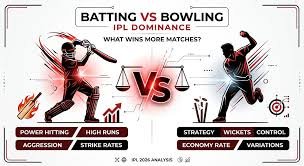
In this blog, we will explore both batting and bowling strategies in IPL, analyze their importance, and answer the key question: Does batting win matches, or does bowling control them?
Understanding the Nature of T20 Cricket
T20 cricket is fast, aggressive, and unpredictable.
Key Characteristics
- Limited overs (20 per side)
- High scoring rate
- Less time for recovery
- Quick decision-making
Impact on Strategy
- Batting becomes aggressive
- Bowlers focus on control and variation
- Every over becomes crucial
Batting Strategy in IPL
Batting in IPL is all about maximizing runs while minimizing risks.
1. Powerplay Strategy (Overs 1–6)
The powerplay is the most aggressive phase for batting.
Objectives
- Score quickly
- Take advantage of field restrictions
- Build strong start
Key Techniques
- Attacking fast bowlers
- Playing aerial shots
- Targeting weak bowlers
2. Middle Overs Strategy (Overs 7–15)
This phase is about stability and control.
Objectives
- Rotate strike
- Build partnerships
- Maintain run rate
Key Techniques
- Smart shot selection
- Avoid unnecessary risks
- Use gaps effectively
3. Death Overs Strategy (Overs 16–20)
This is where matches are decided.
Objectives
- Maximize scoring
- Hit boundaries consistently
Key Techniques
- Power hitting
- Pre-planned shots
- Targeting specific bowlers
Role of Finishers
Finishers are crucial in IPL.
Key Skills
- Handling pressure
- Scoring quickly
- Decision-making
Bowling Strategy in IPL
Bowling is about control, variation, and execution.
1. Powerplay Bowling Strategy
Bowlers aim to take early wickets.
Objectives
- Break partnerships
- Build pressure
Techniques
- Swing bowling
- Tight line and length
- Aggressive field placements
2. Middle Overs Bowling Strategy
Spinners play a major role here.
Objectives
- Control run rate
- Force mistakes
Techniques
- Variation in pace
- Flight and spin
- Defensive fields
3. Death Overs Bowling Strategy
The toughest phase for bowlers.
Objectives
- Prevent boundaries
- Execute perfect deliveries
Techniques
- Yorkers
- Slower balls
- Wide lines
Batting vs Bowling: The Real Battle
IPL is a constant battle between:
- Batting aggression
- Bowling control
When Batting Dominates
- Flat pitches
- Short boundaries
- Weak bowling attack
When Bowling Dominates
- Slow pitches
- Spin-friendly conditions
- Strong bowling unit
Importance of All-Rounders
All-rounders bridge the gap.
Benefits
- Balance in team
- Flexibility in strategy
- Backup options
Match Scenarios
High-Scoring Matches
- Batting plays bigger role
- Bowlers struggle
Low-Scoring Matches
- Bowlers dominate
- Batting becomes challenging
Role of Captaincy
Captains manage both batting and bowling strategies.
Key Decisions
- Bowling changes
- Batting order
- Field placements
Data and Analytics
Modern IPL teams rely on data.
Usage
- Player matchups
- Performance trends
- Strategy planning
Fielding as a Deciding Factor
Fielding supports both batting and bowling.
Importance
- Saves runs
- Creates chances
- Maintains pressure
Common Mistakes
Batting Errors
- Over-aggression
- Poor shot selection
Bowling Errors
- Predictable deliveries
- Poor execution
Which is More Important?
Reality
Both are equally important.
Key Insight
- Batting sets the game
- Bowling controls the game
Winning Formula in IPL
Successful teams:
- Have strong batting lineup
- Possess reliable bowlers
- Maintain balance
Future Trends
- More aggressive batting
- Advanced bowling variations
- Data-driven strategies
Conclusion
The debate between batting and bowling in IPL has no single answer. Both are equally important and complement each other. While batting creates excitement and sets targets, bowling ensures control and discipline.
The teams that strike the right balance between these two aspects are the ones that succeed consistently in IPL.
Understanding this balance allows fans to appreciate the game beyond just runs and wickets.